


APPLICATION GUIDE DOWNLOAD
Build Smarter, More Cost‑Effective Test Systems with NI PXI
4 New Affordable Products Released! The NI PXI portfolio is expanding with affordable options with a new cost effective PXI controller and hybrid chassis, a 14-bit high resolution oscilloscope, and an 18-bit multifunction I/O module, enabling low level signal capture, tighter performance validation, and reduced system cost.
NI’s Fundamentals of Building a Test System equips engineers with clear guidance for designing smarter, more reliable automated test systems, covering TCO modeling, instrumentation, power design, switching, software architecture, thermal management, deployment, and long‑term maintenance. This collection provides the practical frameworks and technical best practices engineers need to develop scalable ATE systems from concept through lifecycle support.

Together, these consolidated guides equip you with insight required to build scalable, cost‑efficient systems and essential best practices for reliable test design.
New Cost-Effective PXI Products in This Guide:

NI PXIe-1081
18-Slot All-Hybrid Chassis

NI PXIe-8842/PXIe-8862
Embedded controllers without GPIB

NI PXIe-5108
4- and 8-channel high-resolution,
14-bit oscilloscope
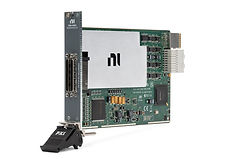
PXIe-6381 and PXIe-6383
18-bit resolution with ±10 V input range for improved accuracy
Fundamentals of Building a Test System:
02 Modeling the Total Cost of Ownership of an Automated Test System
In this guide, learn about the tools and insight you need to evaluate your test organization, propose changes where significant cost savings are available, and improve the profitability of your company year over year with smarter investment decisions.
12 Selecting Instrumentation
When building automated test systems, the primary tools at your disposal come in the form of measurement instruments. These instruments include known commodities like digital mulitmeters (DMMs), oscilloscopes, and waveform generators as well as a variety of new and changing categories of products like vector signal transceivers and all-in-one oscilloscopes.
26 Automated Test System Power Infrastructure
A power layout ensures all components operate properly by avoiding bottlenecks where a component may need more power than the power distribution can provide. This is especially important for components that could compromise operation of the whole system if starved of power. This guide covers test system power planning by listing the steps and considerations for creating a power layout.
42 Switching and Multiplexing
When adding switching to an automated test system, you have three main options: design and build a custom switching network in-house, use a stand-alone box controlled via GPIB or Ethernet, or use a modular platform with one or more instruments such as a digital multimeter (DMM). Switching is almost exclusively used alongside other instruments, so tight integration with those instruments is often a necessity. An off-the-shelf, modular approach can meet these integration challenges inherent in most common test systems. This guide will outline best practices for integrated switching and multiplexing into your test system.
66 Test Executive Software
Test executives are typically implemented as in-house solutions, or purchased as a commercial off-the-shelf (COTS) products. In the prototypical build versus buy argument, a test architect must determine whether it makes more sense to write a custom test executive or to invest and integrate an existing solution. Before deciding whether to build or buy a test executive, it is necessary to understand the purpose and core functionalities of this kind of software. This guide summarizes key functions of a test executive and explores practical scenarios to apply this knowledge.
78 Hardware and Measurement Abstraction Layers
As products get more complex, so do the systems required to test them. ATE instrumentation costs become important, so the ability to reuse instrumentation across several products is often a necessity. Furthermore, shortened development times require hardware and software to be developed in parallel, usually with poorly defined requirements. Then, once deployed, long product life cycles mean that failing or obsolete instruments, as well as product and test requirement changes, could produce more challenges for test equipment. Because of this, modularity, flexibility, and scalability are critical to a successful automated functional test system.
107 Rack Layout and Thermal Profiling
This paper equips you with the knowledge to learn more about your design to avoidrisk. Learn how thermals impact measurement quality, see basic design approaches,and explore thermal modeling tools for designing a rack measurement system.
122 Mass Interconnect
Building a test system without a plan for how you will connect your instrumentation to your device under test (DUT) is similar to trying to drive your car without wheels. Your car may have best-in-class horsepower and Italian leather seats, but you aren’t going to reach your destination without wheels. Mass interconnects and test fixtures are where the rubber meets the road for automated test systems. After determining your instrumentation, the number of switches you need, and the location that your switches will reside in the test system, the next step is to choose a suitable mass interconnect system and design an appropriate fixture that seamlessly mates your DUTs to the rest of the system.
133 Software Deployment
Deployment, for the purposes of this guide, is defined as the process of compiling or building a collection of software components and then exporting these components from a development computer to target machines for execution. The reasons test engineers employ deployment methods rather than run their test system software directly from the development environment come down mainly to cost, performance, portability, and protection.
151 System Maintenance
Automated test systems inevitably fail over time, and unexpected breakdowns can be costly. While failure cannot be eliminated, a strong maintenance strategy reduces risk and total cost of ownership. Designing systems for maintainability and implementing a structured maintenance program helps extend system life, preserve capital investment, and minimize downtime through effective logistics and inventory planning. The core goal is to keep equipment running reliably for as long as possible—and to restore functionality quickly and cost‑effectively when issues occur.